
Which Escape Room Fits Our Team?
There’s that moment when the team is already assembled and the date is roughly decided, but one question still hangs in the air: okay, but which room should we book?
This is where things often get tricky. The best choice isn’t necessarily the room that looks the hardest or the most popular on paper. The best one is the one that actually fits your team.
There’s no universal answer to the question “which escape room is right for us?” The right decision depends on who you are, what kind of atmosphere you’re looking for, how much pressure you enjoy, and whether you want a relaxed shared activity or an intense 60 minutes you’ll still be quoting days later.
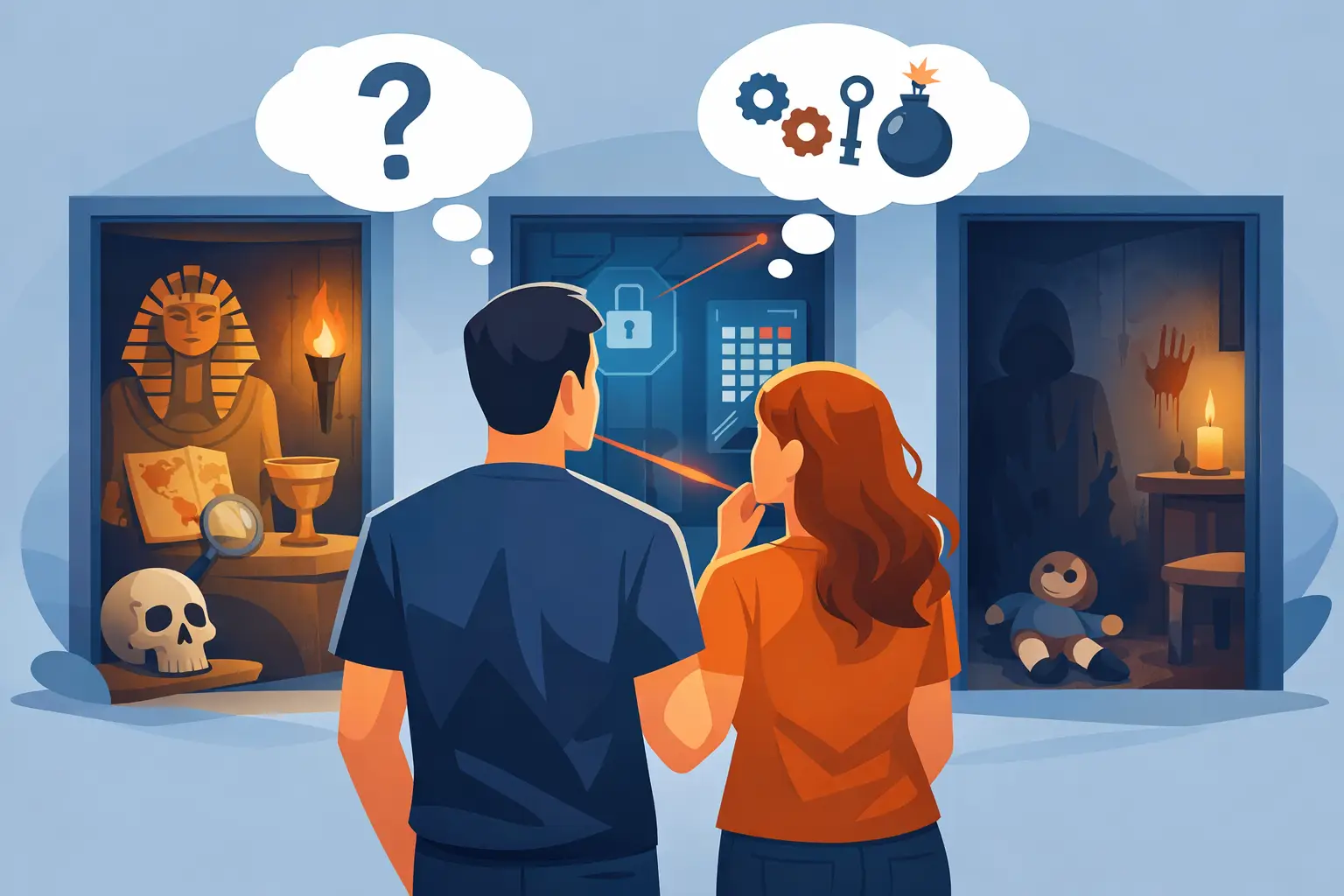
Which escape room is best for us if it’s our first time?
Before their first game, many teams automatically look for the “easy” room. This is partly logical, but it’s not always the best choice.
Beginner teams don’t necessarily need lower difficulty — they need clear game flow, strong theming, and puzzles that quickly pull them into the experience.
If it’s your first time, choosing a room that offers more than just puzzles can make a huge difference. A game with cinematic design and an engaging story will pull you in much faster than a room where the first ten minutes are just about trying every identical lock.
What really makes a first game memorable is feeling like you’ve stepped into the middle of an adventure from the very first moment.
It also matters how comfortable your group is with time pressure. Some teams love the intensity and fast pace. Others prefer exploring the room, discovering the story, and progressing more calmly. The best first experience is one that doesn’t overwhelm you but also keeps you engaged.
If you’re experienced players, don’t focus only on difficulty
Experienced players often look at one thing: challenge level.
That’s understandable, but the best escape rooms aren’t memorable simply because they’re difficult. They’re memorable because they are cleverly designed.
The real excitement doesn’t come from spending twenty minutes stuck on one code. It comes from rooms that keep surprising you, changing pace, and putting the team into new situations.
If your group has already played many rooms, it’s worth looking for experiences where set design, space, and gameplay work together. A premium escape room doesn’t just give you puzzles — it creates scenes and moments you become part of.
Team chemistry also matters. A group that already works well together can easily handle a more complex room. But if several players have never played together before, even strong individual players may find that the toughest rooms aren’t necessarily the most fun.
Escape rooms are ultimately team games. Without shared rhythm and communication, even the best puzzles can fall apart.
Team size matters much more than you might think
Playing with two people, four people, or eight people creates completely different experiences.
Smaller teams tend to have a more focused and intimate game. Everyone gets more time to explore and interact with the puzzles, and it becomes clearer how well you actually cooperate under pressure.
For pairs or small friend groups, it’s especially important that the room doesn’t overload players with puzzles. Otherwise, the experience can quickly turn into a constant rush.
Around four to six players is often the sweet spot. There are enough people to split tasks and communicate ideas, but not so many that someone ends up standing on the sidelines.
With larger groups, the requirements change again. Seven or eight players need a room with larger spaces, faster pacing, and multiple puzzle paths. Otherwise, two people solve everything while others mostly watch.
For bigger teams, the best rooms are those where everyone can contribute at the same time.
About the AROOM escape room experience
Once your team is assembled and the date is decided, the next big question is usually simple: which escape room should you choose?
In a city like Budapest, the options can seem endless. But the real difference between escape rooms isn’t just difficulty — it’s how immersive the experience feels once the door closes behind you.
The games at AROOM are designed for players who want more than just solving locks and codes. Instead of isolated puzzles, the rooms are built around complete cinematic stories where every task pushes the narrative forward.
From the first minutes, teams often find themselves naturally splitting roles: someone searches the room, someone connects clues, while others piece together the bigger picture.
If this is your first escape room experience, choosing a game with strong storytelling and immersive set design can make a huge difference. When puzzles are integrated into the environment and the story, it’s much easier for new players to get pulled into the adventure.
If you’d like to explore the available experiences, the page gives a good overview of the different themes and gameplay styles.
Whether you’re planning a night out with friends, a birthday program, or a corporate team-building activity, a great escape room works best when the entire team moves forward together and everyone contributes to the solution.
To browse the full selection of games or book your next adventure, visit the .
Choosing based on atmosphere makes the decision much easier
If you’re unsure, don’t start with difficulty level. Start with the kind of evening you want to have.
This is the simplest filter.
If your group loves cinematic and intense experiences, look for rooms where the set design, story, and atmosphere immediately pull you in. These are the experiences where everyone walks out talking at the same time about their favorite moment.
If you’re looking for something lighter and more playful, choose a room that still offers challenge but doesn’t rely on heavy or dark themes. Not every team wants a tense thriller atmosphere.
Corporate groups have another consideration. The best team-building rooms are not the ones where everyone can show off individually, but the ones where it becomes clear who communicates well, who notices details, and who can keep the team focused under pressure.
Which escape room fits us if the group is mixed?
This is one of the most common situations.
Some players are experienced, others are complete beginners. Some people love visuals and story, others prefer logic puzzles. And there’s always someone asking: is it going to be scary?
For mixed groups, the best choice is usually a room that offers multiple types of gameplay. Searching, teamwork puzzles, visual surprises, and a clear narrative all help ensure everyone can contribute.
In these cases, it’s better to avoid extremes. A very difficult room may frustrate beginners, while an overly simple one may bore experienced players.
The middle ground here isn’t a compromise — it’s often the smartest choice.
What you should actually read from room descriptions
Many players only check player count and difficulty, but good room descriptions reveal much more.
Pay attention to tone. If the description focuses heavily on story and immersion, the experience will likely emphasize atmosphere and narrative. If it highlights puzzle density, you can expect a more logic-driven game.
It’s also useful to check how active the gameplay is. Some rooms focus on observation and detail, while others rely on movement, fast pacing, and constant changes in situation.
On a Friday night with friends, it matters whether you want to calmly investigate clues or be swept along by an intense storyline.
When to play it safe and when to take a risk
If the game is for a birthday, a date, or a long-planned gathering, it’s often safer to choose a room that works well for a wide range of players.
But if your team actively enjoys intense experiences and challenging puzzles, choosing a more demanding room can create the most memorable stories afterward.
Budapest offers many escape rooms today. But finding one that truly delivers high-quality design, pacing, and immersion is another matter.
If you want your choice to feel like a perfect fit rather than a gamble, it helps to start from places where the theme isn’t just decoration it’s the core of the experience.
And that’s exactly where the right escape room choice begins.